
Tokenisation is the process of replacing debit and credit card numbers with a set of characters or tokens.

As the Omicron variant of Sars-CoV-2 takes centrestage, vaccine makers in India are of the view that scaling up the existing vaccines to make them more effective is possible.

The share of total health expenditure as part of the gross domestic product (GDP) went down to 3.3 per cent in 2017-18 from 3.8 per cent in the previous two years, according to the national health account data released on Monday by the health ministry. The share of government expenditure as part of total expenditure as well as GDP has gone up from from 3.78 per cent to 5.12 per cent between 2013-14 and 2017-18, which could also explain a decline seen in out of pocket expenditure in 2017-18. Health ministry also emphasised the increase in the government health expenditure as part of the total GDP from 1.15 per cent in 2013-14 to 1.35 per cent in 2017-18.

After ramping up production to meet the steep demand spike during the Covid-19 pandemic, Indian medical device makers are now struggling with idle capacity. According to industry estimates, around a third of the installed capacity, especially for consumables, disposables, small-ticket electronic items, etc., is lying unutilised. Sample this: India used to produce just 6.24 million pieces of PPE kits per annum before the pandemic, but by June this was ramped up to 233.87 million pieces per annum.

'Antiviral treatment will have no change. Spike protein change may affect the immunity protection.'
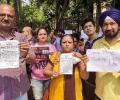
The draft amalgamation scheme of Punjab and Maharashtra Co-operative (PMC) Bank with Unity Small Finance Bank (SFB) allowed quick relief to depositors with savings of up to Rs 5 lakh, but a long wait for those who had their nest egg with the scam-tainted bank. If the scheme gets approved, 96 per cent (or 880,000 of 924,000) depositors will get their full money straightaway after PMC is merged with Unity SFB. According to the draft scheme, retail investors may get up to Rs 5 lakh from the Deposit Insurance and Credit Guarantee Corporation (DICGC) instantly, and then some more in phases till they can recall their full deposits after 10 years.
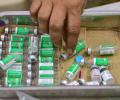
With around 2 million Covid vaccine doses likely to get wasted in December, leading hospital chains have now started to give it gratis to citizens. Sohini Das and Ruchika Chitravanshi report.

A nasal vaccine, one expert said, is a "fantastic idea" for two reasons -- one, it can potentially create sterile immunity, and two, it is easy to administer and thus scalable.

The Insurance Regulatory Development Authority of India (Irdai), the regulator for insurance companies, is set to allow the insurers to offer wellness programmes along with life insurance policies that can earn reward points for the policyholders. These reward points can be redeemed for getting a discount during renewal. The insurance regulator has circulated draft guidelines to insurance companies for feedback before issuing the final guidelines, as is the norm.

A lot depends on how Srei shapes up under the new administrator and his team, which is critical for investors' interest.
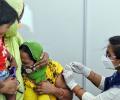
Experts, however, feel that given the intensity of the second wave and the high single dose coverage, India is in a good position to avoid any drastic wave in the near future.

Tamil Nadu plans parallel programme with unique user IDs
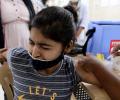
Will syringe shortage puncture India's Covid vaccine plans?

Lack of clarity on data-sharing persists, public health experts sceptic about the pilot that was run in six Union territories as benchmark for national roll-out

Term insurance policy premiums are set to rise by 25 to 30 per cent with Munich Re, the largest reinsurer for the Indian insurance market, increasing its rates for underwriting portfolios of pure protection plans by up to 40 per cent. According to a senior executive of a private life insurance company, the global reinsurer has communicated its decision about increasing rates. About 8-10 insurance companies have been informed about the move, sources said.

The recent Reserve Bank of India (RBI) norms on tokenisation services, which will be offered by card networks, are likely to result in merchants and payment aggregators incurring a cost as they have to pay a fee to the networks. The merchants and the payment aggregators, in turn, may pass on the cost to the customers. The norms, which were issued by the banking regulator released on September 7, allow card networks like Visa and Mastercard to offer the tokenisation service.

In September, Bharat Biotech aimed to supply 35 million doses, and take this up to 55 million by October. This is still less than what the Indian government expects from the company.
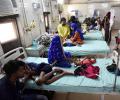
The sudden spike in cases of fever in India has claimed over 100 lives in five states, including UP, MP, Bihar, Haryana, and West Bengal. In UP, Firozabad and Mathura alone have reported 72 cases.

Pfizer can show the FDA approval to the Indian regulator and present a case that based on whatever data submitted, the US regulator has granted a full marketing nod, says Sohini Das.

The Centre is looking to procure around 1 billion syringes between September and December to support the COVID-19 vaccination drive.
 © 2026 Rediff.com - Investor Information - Advertise with us - Disclaimer - Privacy Policy - Sitemap - Feedback - About us - Terms of use - Grievances